Red pandas are iconic symbols of the Himalayas. Not only are they charismatic, but they are also uniquely adapted to live at extremely high altitudes. In fact, their distinct, russet-colored coat helps camouflage them within the bamboo forests, mosses, and fungi found in their Himalayan habitat.
Unfortunately, red pandas face population declines due to the destruction of their forest homes, resulting in the loss of critical bamboo food sources and trees crucial for nesting. These threats and their endangered status make Bhutan’s first-ever National Red Panda Survey incredibly significant. Earlier this year, a report from the Royal Government of Bhutan documented at least 302 individuals within the country’s forests.
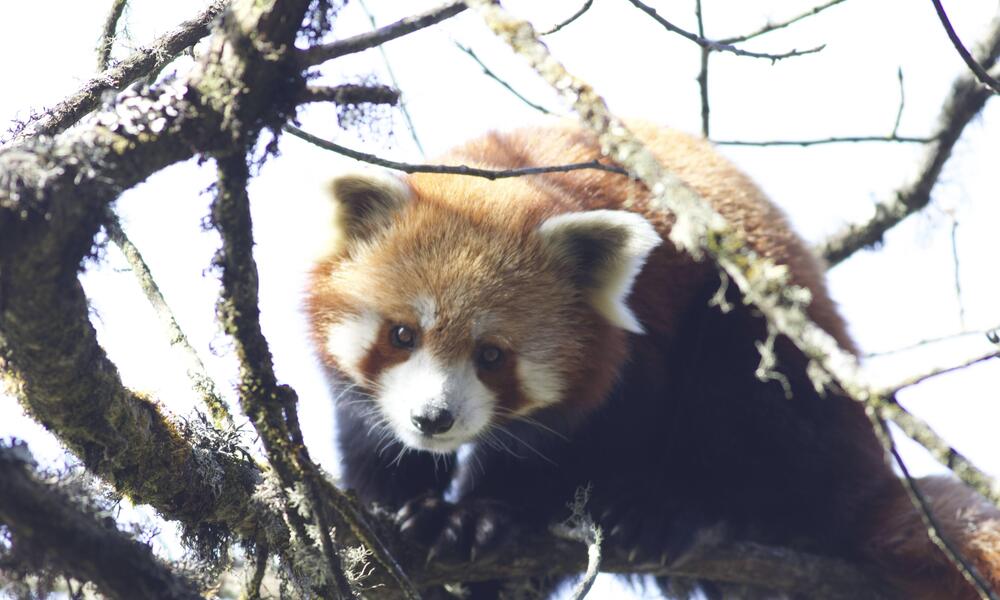 © DoFPS
What they found
DNA analysis of scat samples found a minimum of 302 individuals in the surveyed area, which represented only 6% of the country. This suggests a potentially larger overall population, emphasizing the need for more comprehensive documentation across a broader range. . The survey pinpointed areas where red pandas are flourishing and regions that need further protection measures, providing valuable information about habitat connectivity. Lastly, the study revealed that Bhutan’s red pandas belong to the Himalayan red panda species (Ailurus fulgens) and show distinct genetic traits, underscoring the importance of preserving their unique genetic heritage.
The future of red panda conservation
Results from the survey will help with the development of future conservation initiatives in Bhutan. In particular, the researchers argue that a multi-pronged approach to red panda conservation is necessary. This includes habitat protection, safeguarding wildlife corridors that connect different populations, and long-term monitoring efforts.
Red pandas are crucial for supporting the rich ecosystem of the Eastern Himalayas. As an indicator species, their health tells us much about the high-altitude region overall. “Conservation efforts for red pandas are vital for safeguarding this unique species,” says Dechen Dorji, WWF’s Vice President for Asia, Wildlife Conservation. “But also for ensuring the stability of the Eastern Himalayan ecoregion, which is essential for climate regulation, hydrology, and the livelihoods of millions of people.”