Like medications, vaccines can cause side effects, also known as “undesirable” effects. Richard Terrell reported that the Johnson & Johnson injection triggered an extremely rare reaction: a widespread skin rash covering his entire body. His case was reported by 8 News, Fox5, and Business Insider.
At 74, Richard Terrel suffered a very rare reaction. In an interview with 8 News, he opened up about his health as he gradually recovers from his symptoms. Still weakened, he nevertheless considers himself lucky and grateful to have been vaccinated against Covid-19.
A severe rash that caused redness on her skin
Four days after receiving a single dose of the Johnson & Johnson vaccine, Richard Terrel began to experience the first symptoms without knowing if they were attributable to the injection. It started first with discomfort in the armpit , “and a few days later, I started to get an itchy rash, and after that, I started to swell and my skin turned red,” the man explains.
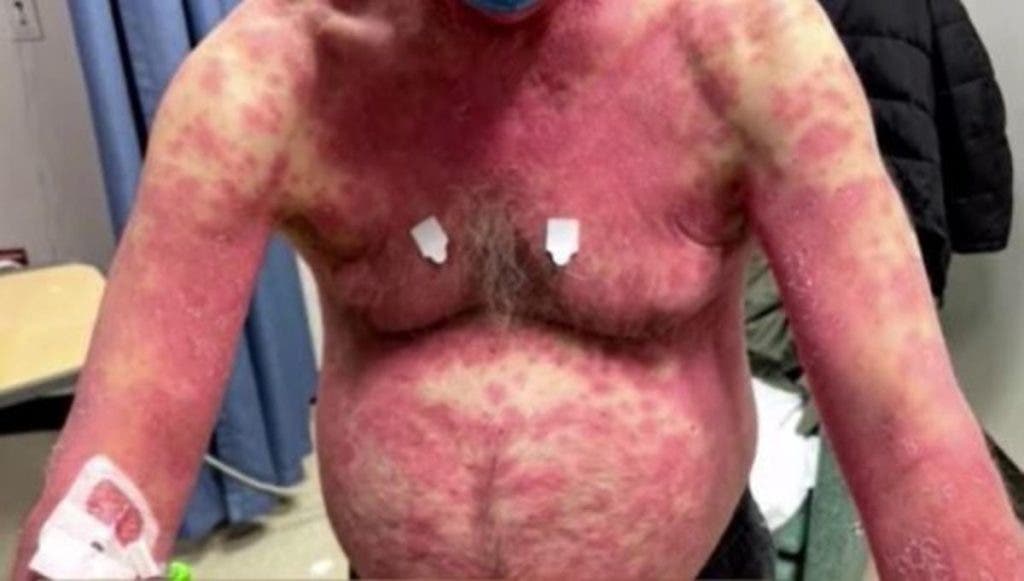
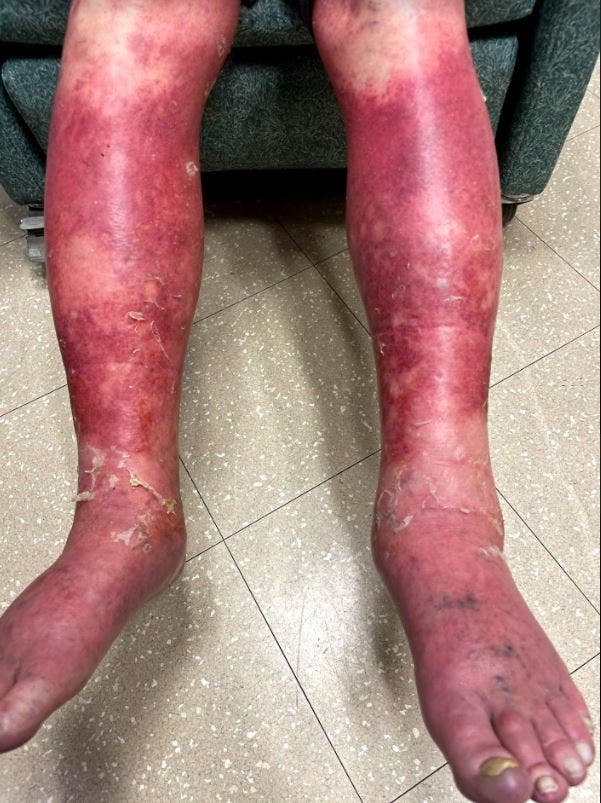
His condition worsened over the following days, prompting him to consult a dermatologist and end up in the emergency room. After being admitted to the hospital, the rash rapidly spread to his entire body, accompanied by swelling in his hands and legs, redness, and peeling.
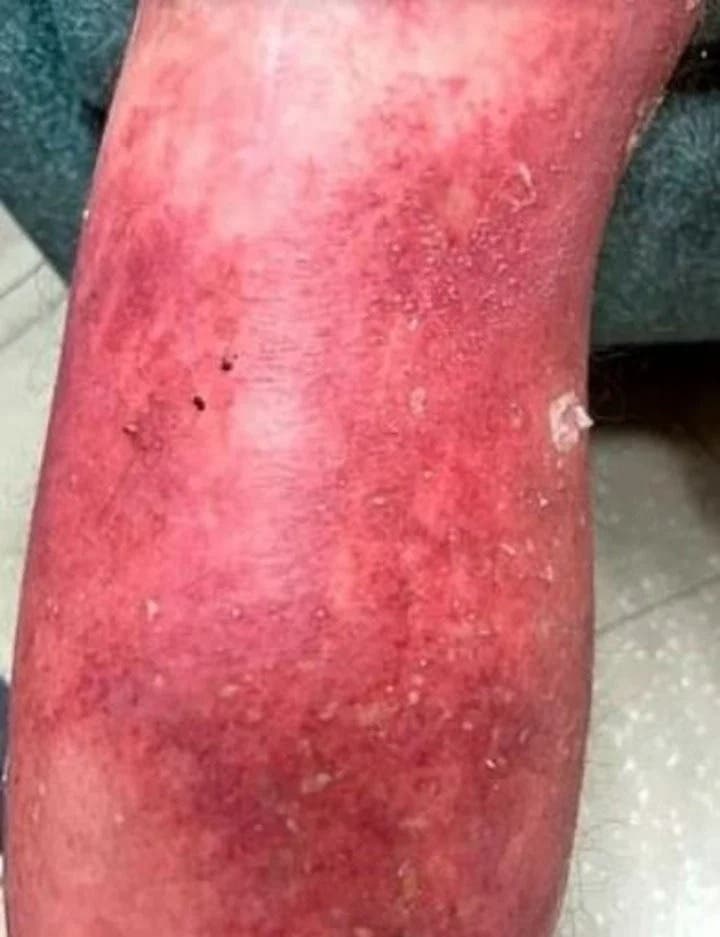
“It stung, burned, and itched,” Richard described, referring to the pain he felt. “Every time I bent my arms or legs, like on the inside of my knee, it was very painful where the skin was swollen and prone to friction,” he added.
The doctors performed a biopsy
Dr. Nutan, a dermatologist who was among the doctors who examined Richard Terrell, revealed that after performing a biopsy, his condition was attributed to a drug reaction. She added that if he hadn’t received treatment, it could have been life-threatening. “The skin is the largest organ in the body, and when it becomes inflamed like his, you can lose a lot of fluids and electrolytes,” she explained.
However, the expert did not immediately assume that these symptoms were related to the vaccine. She recounts consulting several colleagues around the world, conducting tests, and carrying out a meticulous process of elimination before determining that this very rare reaction was linked to the Johnson & Johnson injection. “We ruled out all viral infections, we ruled out Covid-19, we made sure his kidneys and liver were in good condition, and finally, we came to the conclusion that the vaccine he received was the cause,” explains Dr. Nutan.
According to her, Terrell’s genetic makeup and the type of vaccine he received may have played a role in the onset of these symptoms, adding that the Moderna and Pfizer vaccines use messenger RNA while the Johnson & Johnson vaccine is a viral vector vaccine. However, the expert admits that the data remains insufficient to draw definitive conclusions.

A reaction that remains extremely rare
To address any concerns or worries about vaccination and its side effects, Dr. Natan is very clear about the benefits of getting vaccinated against Covid-19 and specifies that the severity of her patient’s rashes is extremely rare. Therefore, they should in no way discourage anyone from getting the injection . “If you consider the risk of adverse effects from the vaccine, it’s really very, very low,” the doctor adds.
In an interview with Fox News, she stated that this might be the first reported case of such a reaction following the Johnson & Johnson injection, but that it is not unusual for vaccines or medications—even those frequently used—to cause skin reactions. “It’s something we should all be aware of, but not afraid of,” she cautioned. “We know how to manage this reaction, but what we don’t know is how to manage the severely ill COVID-19 patients our team encountered last year. Controlling the infection is more difficult than controlling the reaction to the vaccine ,” Dr. Nutan emphasized. She also noted that, while not as publicized, similar cases have occurred in response to other medications. In this regard, considering the risk of infection and the benefits of vaccination, “the risk-benefit balance is still heavily in favor of the vaccine,” the dermatologist concluded.