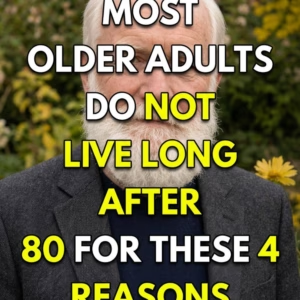
Ignored Warning Signs: A Father’s Struggle with Esophageal Illness and the Lesson Seniors Can’t Afford to Miss

What if you worked hard to improve your health, only to discover something serious was quietly developing inside your body? That’s what happened to 41-year-old California father Mark Sevillano Jr. His experience is a reminder—especially for older adults—that even small, nagging symptoms should never be ignored.

After a difficult divorce and years of stress, Mark rebuilt his life with healthier habits. He exercised regularly, ate better, and worked toward emotional stability. Friends noticed his renewed energy, and for the first time in a while, life felt hopeful. But beneath this progress, a hidden medical problem was taking shape.

The earliest warning sign seemed minor. Certain foods felt like they were sticking in his throat, which he assumed was simple acid reflux. As swallowing grew harder and meals became stressful, he began losing weight—not from dieting, but because eating was uncomfortable. Many seniors experience similar symptoms and write them off as “just age,” which can delay crucial care.


When Mark sought help, his concerns were initially dismissed. He was told it was likely reflux, and testing was slow to follow. This is a common experience for many patients, especially older ones, whose symptoms may not match typical risk profiles. As his condition worsened, Mark trusted his instincts and went to the emergency room.

Scans revealed a mass in his esophagus, and he soon received a diagnosis of esophageal cancer. Surgery became necessary. Doctors removed a large portion of his esophagus and reconstructed a new passage, giving him a chance at survival. The operation was followed by chemotherapy and a long, challenging recovery.

The experience highlighted not only the physical toll of cancer but also the financial strain of treatment. For seniors—many living on fixed incomes—understanding insurance, Medicare, and supplemental coverage is essential before a crisis hits.

Today, Mark is in remission. His message is clear: listen to your body, advocate for yourself, and take small symptoms seriously. For older adults especially, these early signals can make the difference between catching an illness early and facing it too late.

Related Posts

Folk singer walks out of event to protest JD Vance’s appearance

Folk singer Dolly Mavies, whose real name is Molly Davies, said she and her band pulled out of a gig in Daylesford after hearing that US Vice…

He was mocked as a “fake veteran” by the bank staff, but then a general arrived and flipped the situation

A Morning at the BankThe morning sun stretched across Meridian Financial Center as Walter “Walt” Thompson straightened his faded Navy cap and stepped out of his old…

Charles Krauthammer: His Tragic Journey from Life-Changing Accident to Lasting Legacy

Charles Krauthammer’s life was one marked by tragedy, resilience, and an unyielding brilliance that made him one of the most respected voices in American political commentary. To…

Inside the sad childhood of Viola Davis

Viola Davis’ story is one of resilience, strength, and triumph. The only surviving image of her childhood is a kindergarten photo — a haunting reminder of the…

Doctors find “gold mine” in woman’s knees

When a 65-year-old South Korean woman went in for knee pain, doctors weren’t expecting to strike gold. But that’s exactly what they found. Unwanted stomach issuesLiving with…

Who is Naveed Akram? 24-year-old man identified as gunmen in Sydney’s Bondi Beach mass shooting that killed 10 people

At least 10 killed after a shooter open fired on people, including children at Sydney’s Bondi beach in Australia on December 14, Sunday. One of the gunmen…

Leave a Reply

Your email address will not be published. Required fields are marked *