The subsequent legal proceedings focused not only on the facts but also on the intent behind the actions. The defense, represented by Mike Howard, depicted a terrified teenager reacting in a state of panic. They contended that Karmelo believed he was acting in self-defense during a tumultuous encounter.
The defense maintained that he had been cornered by Austin and others, which left him feeling trapped. They asserted that his actions were not premeditated but rather a response driven by fear and confusion.
They highlighted his sense of remorse, citing his emotional state following the stabbing. His repeated inquiries regarding the victim’s condition were presented as evidence of his immediate regret.
Conversely, the prosecution, led by Bill Wirskye, completely dismissed this narrative. They characterized the incident as a calculated and unjustifiable act of violence.
Wirskye described it as a “sneak attack,” executed by an individual who arrived armed and opted for escalation instead of retreat. He emphasized that there were multiple opportunities to disengage that were disregarded.
Central to the case was a crucial legal question: can an individual provoke a confrontation and still assert self-defense? This became the pivotal issue for the jury.
During the sentencing phase, the courtroom was filled with emotion. Karmelo’s mother, Kayla Hayes, implored for leniency, while Hunter Metcalf recounted the enduring pain of losing his twin brother.
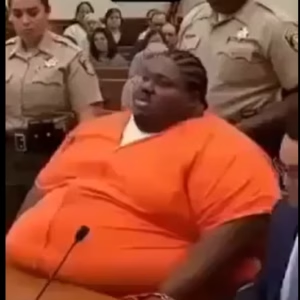
Ultimately, the jury rejected the defense’s arguments and sentenced Karmelo to thirty-five years in prison. This verdict highlighted the enduring repercussions of a fleeting, irreversible act of violence.