A newly released poll comparing America’s First Ladies has reignited a familiar conversation—how history remembers the women who stood beside presidents, and how the present judges those still in the spotlight.
This time, the results have drawn particular attention to Melania Trump, whose public image continues to sit in a complicated space. Neither widely embraced nor entirely rejected, she appears to reflect the broader divisions shaping modern American politics.
The survey, conducted among 2,255 U.S. citizens, placed Melania alongside some of the most iconic figures to ever hold the role, including Michelle Obama and Jacqueline Kennedy Onassis. In such company, expectations were inevitably high—perhaps unrealistically so.
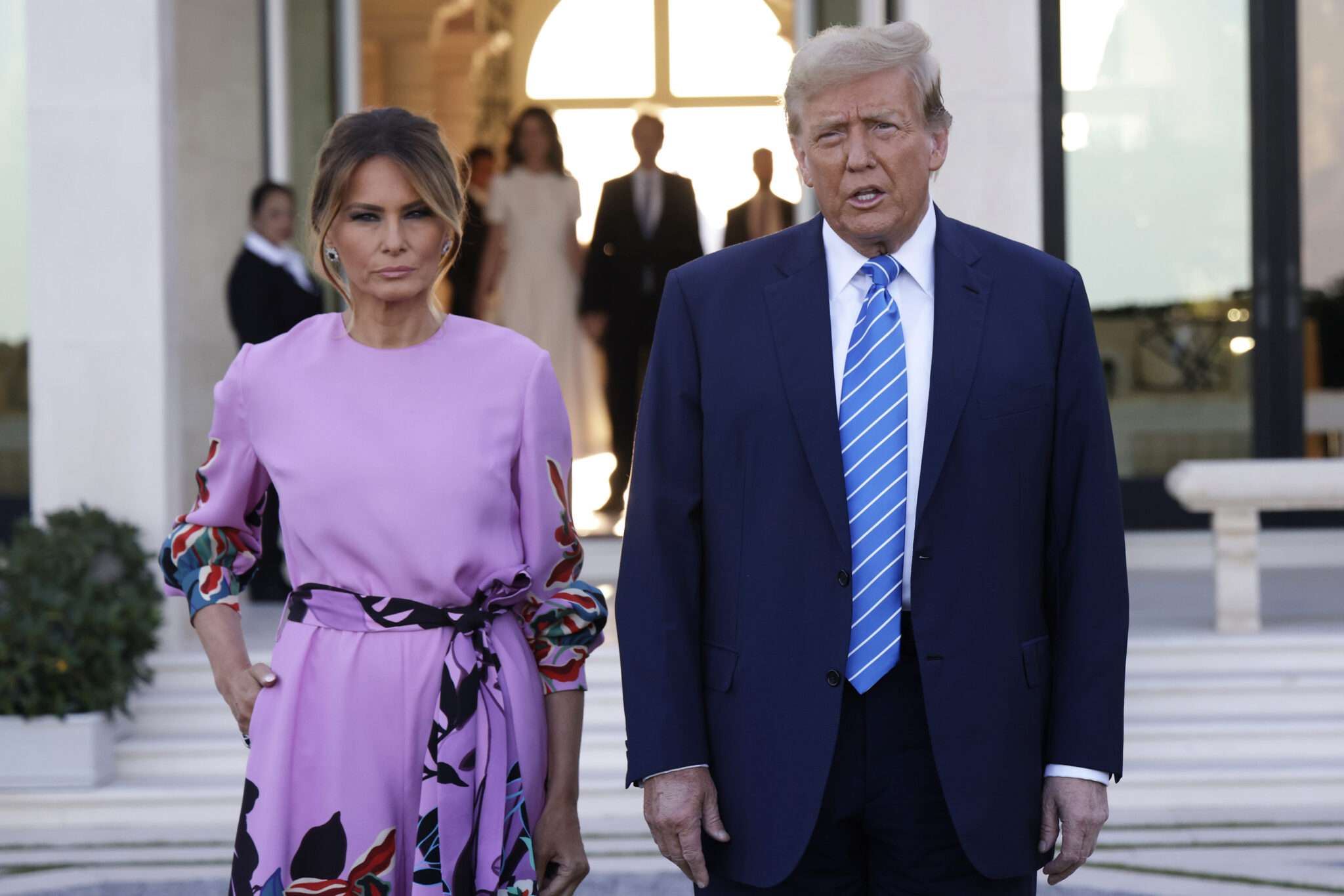
Unlike many of her predecessors, Melania has maintained a notably reserved presence during and after her time in the White House. While her husband, Donald Trump, has remained a constant and polarizing force in public discourse, she has often chosen distance over visibility. That contrast has shaped how she is perceived—less defined by public initiatives and more by mystery.
According to data from YouGov, Melania holds a net approval rating of -16. This places her behind Jill Biden, who stands at -9, but slightly ahead of Hillary Clinton, who recorded -17—the lowest among those measured.
At first glance, those numbers may seem striking, but they also reflect a broader trend. In today’s political climate, negative ratings are not unusual. Public figures, particularly those tied to high-profile administrations, are increasingly evaluated through sharply divided lenses. Approval often depends less on individual actions and more on political alignment.
Still, the poll wasn’t without clear favorites.
Several former First Ladies received strong positive ratings across party lines. Among them were Nancy Reagan (+25), Rosalynn Carter (+32), Lady Bird Johnson (+23), Barbara Bush (+21), and Laura Bush (+19). Michelle Obama also appeared among the most positively viewed, with a +21 rating.
Yet one name stood well above the rest.
Jacqueline Kennedy Onassis achieved a remarkable +56 approval rating, reinforcing her enduring legacy decades after her time in the White House. Her influence—shaped by style, cultural impact, and the historical weight of her era—continues to resonate in a way few others have matched.
The survey also highlighted a predictable pattern: Melania Trump’s ratings differed sharply depending on political affiliation. She performed significantly better among Republicans than Democrats, echoing the broader divide associated with her husband’s presidency.
Methodologically, the poll aimed for balance. Participants were selected using a stratified sampling approach based on demographic factors such as age, gender, race, education, and geographic region. The results were then weighted to reflect voting behavior, party identification, and turnout patterns from recent elections.
Beyond First Ladies, the survey extended to former presidents—and the findings were equally telling.
Donald Trump ranked last among the 20 presidents included, with a net approval rating of -20. Just behind him was Joe Biden, placing both recent leaders at the lower end of public favorability in this particular dataset.
Nearly half of respondents—48 percent—rated Trump’s presidency as “poor,” while an additional 6 percent described it as “below average.” These figures further illustrate how contemporary political figures are often judged in stark, polarized terms.
The poll arrives at a moment when Melania Trump is once again in public view, largely due to renewed media attention surrounding a documentary project reportedly drawing significant financial backing and early interest.
Taken together, the findings offer less of a definitive ranking and more of a snapshot—one shaped by memory, media, and the political climate of the moment. For historical figures, time appears to soften edges and elevate legacy. For those more recent, the judgment remains immediate, divided, and far from settled.