More Than Decorative Details
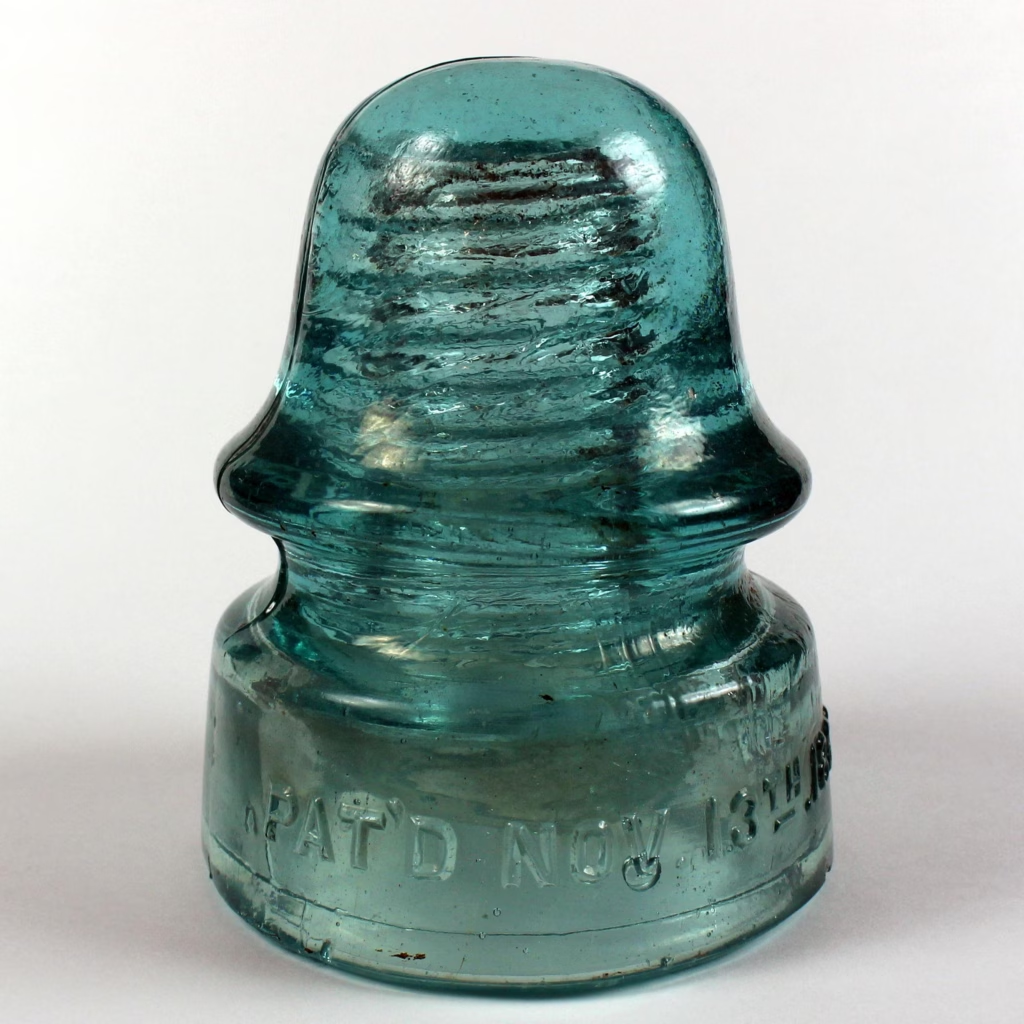
If you’ve ever looked up at a telephone pole, you may have noticed glass or porcelain pieces mounted along the crossarms. At first glance, they can appear decorative or even antique in nature.
In reality, these objects serve a highly practical and essential function. They are insulators, carefully engineered components that help maintain the safety and stability of electrical and communication systems.
Without them, the infrastructure that delivers power and transmits signals would not operate reliably.
What Insulators Actually Do
The primary role of an insulator is simple but critical. It holds electrical or communication wires in place while preventing the electrical current from flowing into the pole or the ground.
Electricity naturally seeks the easiest path to travel. If wires were attached directly to wooden or metal poles without insulation, electrical energy could leak away.
This leakage would weaken power transmission and potentially distort communication signals. Insulators act as a barrier, physically separating energized wires from their supporting structures.
By doing so, they keep electricity contained within the lines where it belongs.
Preventing Electrical Leakage
Electrical leakage occurs when current escapes from its intended path. Even small losses can reduce efficiency and interfere with service.
In power distribution systems, leakage can lead to energy waste and unstable delivery. In communication systems, it can cause static, weak signals, or interruptions.
Insulators are specifically designed to prevent this type of energy loss. Their materials resist electrical flow, ensuring that current remains confined to the conductors.
This containment protects both the infrastructure and the surrounding environment.

Vintage Glass Insulator Clear
Ensuring Reliable Communication
In the early days of telegraphy and telephony, reliable signal transmission depended heavily on effective insulation.
Long-distance communication was particularly vulnerable to interference. Without proper insulation, signals could weaken over distance or become distorted.
Insulators played a crucial role in maintaining clear and dependable connections. They allowed communication lines to stretch across towns and rural areas without constant signal degradation.
As communication networks expanded, the importance of durable and efficient insulators became even more apparent.
Materials Built to Resist Electricity
Historically, insulators were commonly made from glass or porcelain. These materials were chosen for specific reasons.
Glass and porcelain are excellent electrical resistors. They do not allow current to pass through easily, which makes them ideal for insulating energized wires.
Both materials are also durable and capable of withstanding exposure to weather over long periods.
Manufacturers experimented with various designs and materials over time, adjusting shapes and compositions to meet evolving engineering requirements.
Even as technology advanced, glass and porcelain remained trusted choices because of their proven reliability.
Designed for Different Voltage Levels
Not all power lines carry the same amount of electricity. As voltage levels increase, the demands placed on insulators also grow.
High-voltage transmission lines require larger and more robust insulators. These are specifically engineered to prevent a phenomenon known as flashover.
Flashover occurs when electricity jumps from a conductor to another surface, such as a pole or nearby hardware. This can disrupt service and pose safety risks.
To prevent this, high-voltage insulators are designed with extended surfaces and increased spacing between the wire and the pole.
The Umbrella-Like Design
Many insulators feature a shape that resembles stacked umbrellas or disks. This design is not merely aesthetic.
The wide lower skirts and layered form increase the distance electricity would need to travel to reach the pole. By lengthening this path, the design reduces the likelihood of electrical jumping.
The umbrella-like structure also helps manage environmental factors. Rainwater naturally sheds off the curved surfaces rather than pooling.
This shedding action keeps the insulator dry, which enhances its effectiveness. Wet surfaces can conduct electricity more easily, so minimizing moisture contact is essential.
The shape also helps resist dust buildup, further improving long-term performance.
Weather Resistance and Durability
Telephone and power poles are constantly exposed to the elements. Rain, snow, wind, dust, and temperature changes all impact the components mounted on them.
Insulators must be able to endure these conditions without cracking, eroding, or losing their insulating properties.
Glass and porcelain offer strong resistance to weathering. Their smooth surfaces limit contamination buildup and are easy to clean naturally through rainfall.
This durability contributes to the long service life of insulators, reducing maintenance needs and ensuring continued reliability.
Protecting People and Equipment
Beyond maintaining signal clarity and power efficiency, insulators play an important safety role.
By preventing electrical current from reaching the pole or surrounding surfaces, they reduce the risk of accidental contact with energized components.
This protection benefits maintenance workers, nearby residents, and anyone who may come into proximity with utility infrastructure.
Without proper insulation, the risk of unintended electrical conduction would increase significantly.
A Quiet but Essential Component
Although insulators often go unnoticed, they are fundamental to the systems that power modern life.
From keeping household electricity flowing to enabling long-distance communication, their role remains vital.
While early telegraph and telephone systems relied heavily on these glass and porcelain pieces, modern electrical networks continue to depend on updated versions designed for higher capacities and evolving standards.
The basic principle, however, has remained unchanged: keep electrical current contained, stable, and safely separated from its surroundings.
Looking Up With New Understanding
The next time you glance up at a telephone pole and notice those glass or porcelain shapes, you’ll know they are more than remnants of a bygone era.
They represent thoughtful engineering solutions developed to solve a practical problem — how to support wires while keeping electricity where it belongs.
Through careful design, durable materials, and a simple but effective purpose, insulators continue to serve as quiet guardians of both power and communication systems.
What may appear decorative at a distance is, in fact, an essential safeguard woven into the infrastructure of everyday life.